
Villas for sale in Piedmont, Italy
Period houses with gardens and a view, in and around the hill towns of the Langhe, Roero and Monferrato.
A villa in Piedmont is usually not the thing people picture from Tuscany. The characteristic house here is a signorile residence from the nineteenth or early twentieth century, built for a merchant or a wine family, standing in its own garden either on the edge of a hill town or just outside it. Generous rooms, high ceilings, shuttered windows, a garden with mature trees, and very often a view over vines that has not changed in a hundred years.
3 properties of this kind on our books
Everything we are marketing in this category is below. If none of it fits, tell us what you are looking for — a good part of what we sell never reaches a listing page.
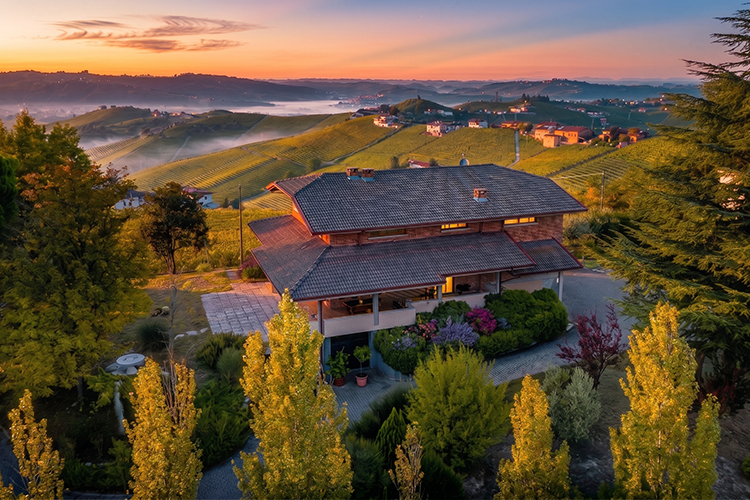
Barbaresco villa - stunning views

Luxury Historic villa

Amazing home in calm location
In detail
Position does more work here than anywhere else. South and south-west facing slopes get the light and the long evenings; a north-facing house a few hundred metres away will be darker and colder for months at a time. Walk the plot at the time of year you would actually use it, and look at what sits below the garden — a view over vineyards is protected in practice by the fact that vineyards are worth more than building land in these hills, but a view over scrub is not.
The thing that catches buyers from warmer countries is the climate. Piedmont sits at the foot of the Alps and has a continental winter: real cold, real fog in the valleys, snow some years. A beautiful house with single glazing, no insulation and an oil boiler is a beautiful house with a heating bill. Ask for the energy certificate, ask what the heating actually costs over a winter, and price any work on windows and insulation into the offer rather than after it.
Gardens are the other running cost people underestimate. A hectare of lawn, hedge and gravel in this climate is a weekly job from April to October.
Where you look changes what you get. Barbaresco, Neive and Treiso put you on the Barbaresco side with Alba twenty minutes away; La Morra and the Barolo villages give you the amphitheatre view and the highest prices in the region. Around Asti and Nizza Monferrato the same budget buys noticeably more house and more garden, with the trade-off that the famous names are half an hour further off. Alba itself is the practical centre — the hospital, the schools, the station and the shopping are there, and a house within twenty minutes of it is easier to live in year-round and easier to sell on.
Against Tuscany or Umbria, Piedmont remains the better value for a comparable restored period house, which is much of why foreign buyers end up here. That gap has narrowed since the UNESCO listing and it has not closed.
What to check before you offer
- Orientation and how much winter sun the house and garden get
- What sits below the view, and who owns it
- Energy certificate, glazing, insulation and the real cost of a winter
- Heating system, its age and its fuel
- Garden size against the maintenance you actually want
- Access in snow, if the house is up a hill track
Looking for something else?
- Vineyards & wine estates
- Farmhouses & country homes
- Palazzi & town houses
- Castles & fortified houses
- B&Bs & guest houses
- Every property we are marketing
If you are at the start of this, the guide to buying property in Italy covers the process end to end. When you are ready to talk, get in touch.