Buying Property in Piedmont: What I Would Tell You Before You Buy
21 August 2026
After 24 years of living in Piedmont and many years of helping international buyers find homes here, I’ve learned that buying property in Italy is rarely as simple as it first appears.
Piedmont is an extraordinary place to live. The scenery is beautiful, the food and wine are exceptional, the people are welcoming, and the location is hard to beat. From the Langhe and Roero, you can be at the lakes, in the mountains or on the Ligurian coast in around 90 minutes.
But buying a house here requires a little common sense. And, occasionally, someone telling you things you probably don’t want to hear.
So here is my honest view of the Piedmont property market and some of the things I think buyers should know before taking the plunge.
The Piedmont property market is very good
If I had to describe the market in one word, I would say good. Actually, very good.
Piedmont is still relatively undiscovered compared with Tuscany, Umbria and some of the other better-known Italian destinations. That is one of its great advantages.
I have more buyers than sellers at the moment, and one of my biggest challenges is finding enough good houses for them. Something else has changed significantly over the last couple of years: the amount buyers are prepared to spend.
We have always had wealthy clients, but I am seeing more of them, particularly from the United States. Around half of my enquiries now come from America. We still see buyers from Scandinavia, Germany, Netherlands, Poland and Switzerland.
I suspect American interest in Piedmont will continue to grow. Many Americans are looking for something different, they love Italy, and Italy generally loves having them here. And when demand increases, prices tend to follow.
Be careful with the cheap houses
This is probably one of the most important things I can say. I regularly receive enquiries from people looking for houses costing €20,000–€200,000 (even though I don’t deal in this price range). There is nothing inherently wrong with buying a cheap property, but you have to understand what you are actually buying.
There are plenty of €20,000 houses in Italy but there’s usually a reason they cost €20,000.
The biggest mistake I see is people becoming attracted to the low purchase price without properly considering the location, the renovation costs, the eventual value of the property and, most importantly, why nobody actually wants to live there.
There are too many examples of people buying a cheap ruin in a town nobody wants to live in, spending far more than expected on the renovation, and then discovering that they have created a nice house that nobody wants to buy.
I see this particularly often because of YouTube and social media. Someone buys a €30,000 house in Italy and makes it look like the deal of the century.
What you don’t always see is the complete cost. Or what happens when you try to sell it. Cheap is not necessarily good value. In fact, it can be very expensive.
The Barolo area is a different market
The most expensive part of Piedmont is undoubtedly the Barolo area. There is an enormous difference in prices between the famous Barolo towns and places only 20 or 30 minutes away. A house that might cost €700,000 elsewhere could easily be €1.5 million in one of the prime Barolo villages*.
Smart buyers are prepared to pay that premium because these places have something that cannot be manufactured: location, reputation, landscape, wine and international recognition.
La Morra, Barolo, Monforte d’Alba, Serralunga d’Alba and the surrounding villages are now firmly on the international property map. I’m certain that demand will continue and prices will increase. It’s still possible to buy a beautiful villa for the price of a tiny 1 bed apartment in NYC or London.
Barolo vineyards are an extreme example. Until very recently, the best vineyards were changing hands for around €4.3 million per hectare. You aren’t simply buying agricultural land. You are buying one of the world’s most famous wine-producing territories.
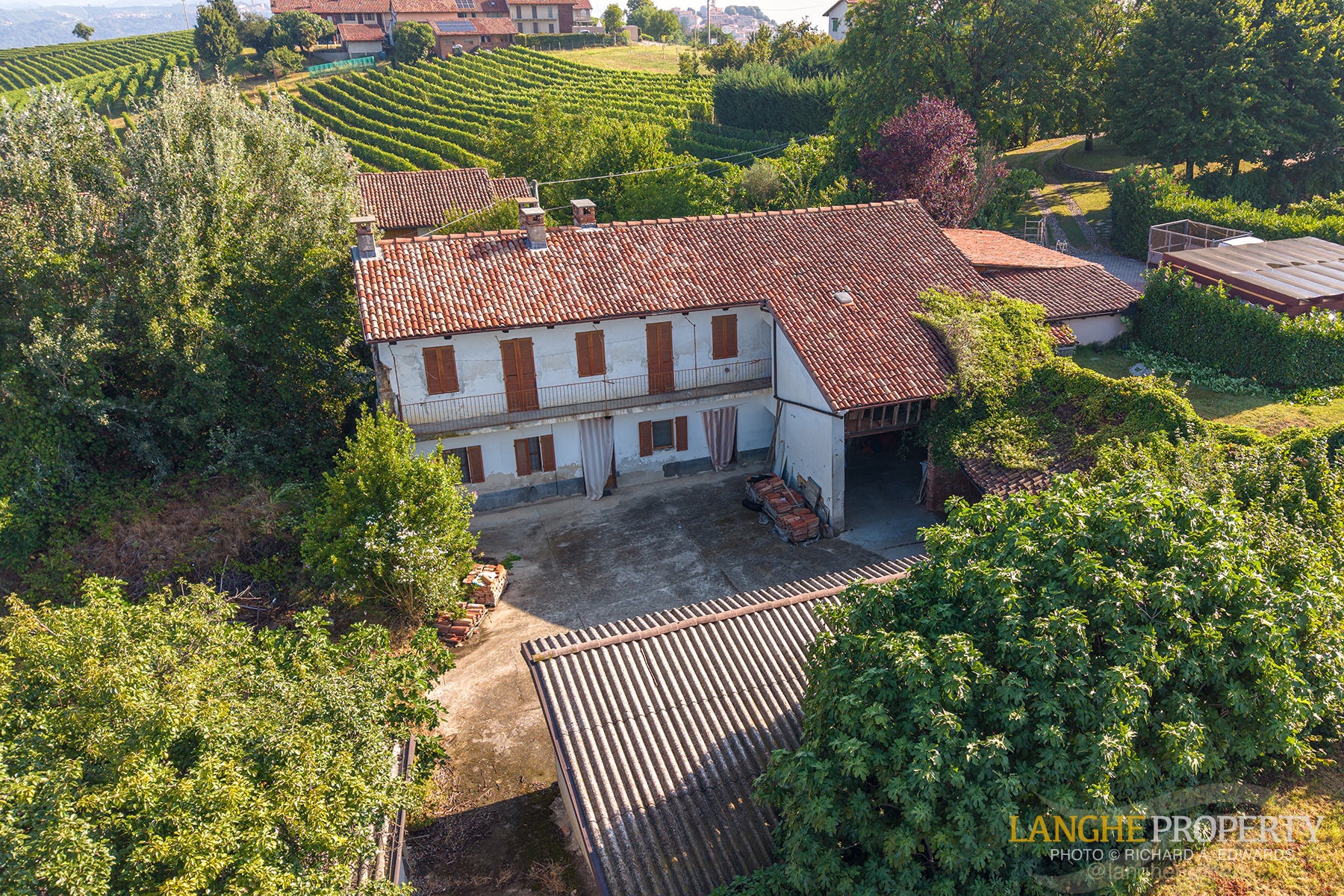
Where can you still find value?
If your budget doesn’t stretch to the Barolo villages, there are still plenty of interesting areas to consider.
Alta Langa, the area around Acqui Terme and parts of the countryside around Asti can offer considerably better value.
But here I would issue another warning: look very carefully at the location.
A beautiful house in the wrong place is still a house in the wrong place. And this brings me to one of my biggest pieces of advice.
Don’t underestimate distance
This sounds obvious, but people often underestimate it when they are looking at properties online.
They see a beautiful house surrounded by vineyards and mountains and think, this is exactly what I’ve been looking for. Then they discover that it takes 40 minutes to reach Alba or another large town or city. And those 40 minutes might involve narrow, winding roads.
Driving 40 minutes on a motorway is one thing. Driving 40 minutes on winding Piedmontese country roads is another.
There are roads in Alta Langa that even rally drivers find demanding. I’m not joking. If you want complete isolation, that’s wonderful. If you want to go to a restaurant, buy groceries, meet friends or get to the airport without turning it into an expedition, think carefully.
Visit the property. Drive the roads. Try the journey yourself. Don’t just look at the kilometres on Google Maps.
Should you renovate or buy something already restored?
Yes, renovating can make sense. But I would be very cautious. Whatever time and budget you think you need, add more.
Builders are busy. Materials cost money. Italian bureaucracy can be slow. And old houses have a habit of revealing surprises once you start opening walls and floors.
The romantic idea is:
“We’ll buy this old house cheaply, renovate it beautifully and save a fortune.”
Sometimes it works. Sometimes you spend far more than you imagined and eventually understand exactly why the house was so cheap in the first place. Personally, I increasingly prefer buying something that has already been restored properly. Someone else has had the heartache, dealt with the builders, discovered the problems. They’ll get a pacemaker and you enjoy the result.
What about building a new house?
Building from scratch can be an excellent option, but finding land where you can actually build is not always straightforward.
If I found the right plot in the right location, however, I would absolutely consider it. There are properties where I would look at the existing building and think: tear it down and start again.
In the right location, that can make much more sense than trying to turn an unsuitable old building into your dream home. But again, do your homework before buying the land.
What about holiday rentals?
This is an interesting one. There is certainly money to be made from holiday rentals in Piedmont, but I wouldn’t describe it as easy money.
The low end of the tourism market around Alba has become particularly difficult. B&Bs and agriturismi are facing high running costs, and there are plenty of properties coming onto the market.
And then there are the guests. Running a holiday rental is a business, and sometimes the guests can be more demanding than you imagined. I’ve heard stories of guests leaving the air conditioning running 24 hours a day with the temperature set to 15°C. That makes it rather difficult to make money.
The high end is a different story. Beautiful houses in beautiful locations can command very high rental prices.
The Barolo towns are the obvious choice if your objective is holiday rental income. They have the wine, restaurants, landscape and international reputation that tourists are looking for. But I would do very careful research before buying a property purely as a rental investment anywhere else.
I get offered a surprising number of existing holiday-rental businesses, especially B&B. That tells me something. If they were all easy and highly profitable, I suspect fewer people would be trying to sell them.
Don’t assume the asking price is the value
This is another big one.
Many properties in Piedmont are overpriced. Owners understandably want to get their investment back. Perhaps they spent €800,000 buying and renovating a property and don’t want to sell it for €600,000.
Unfortunately, the market doesn’t care what they spent. A house is worth what somebody is prepared to pay for it and in comparison with what else can be bought.
I constantly see owners turn down offers because they feel insulted, only to realise several years later that they should have accepted.
And agents often use these overpriced houses as a way to sell another house they have listed — it’s a simple comparison game.
This is why understanding the real market value of a property is so important. Don’t fall in love with the house before you understand the numbers.
And don’t assume that because a property has been beautifully renovated and has had €2 million spent on it, somebody else will automatically pay €2.5 million for it. Especially if the owners have not chosen the right location and have done things to their particular taste — an indoor pool for example, bad layout and designs.. A no-expense-spared renovation should not mean someone will pay whatever is asked for it. There are no doubt better alternatives.
Having said that. Read on..
Don’t forget emotions
We buy with emotions. This is important. It can’t all come down to numbers, risk assessment and cold factors such as these. If we love it, can afford and it’s not going to kill us — maybe we should just do it.
My advice to anyone buying in Piedmont
If you are considering buying here, my advice is quite simple.
Aim below your maximum budget. Don’t spend every last euro you have on the purchase. Leave yourself money for the unexpected — because there will be something unexpected.
Choose the location before you choose the house. A mediocre house in a fantastic location can be a much better investment than a fantastic house in a mediocre location.
Visit the towns. Don’t rely entirely on an estate agent’s description. Walk around. Have a coffee. Go to the supermarket. Look at the restaurants. See what happens on a Tuesday afternoon in November, not just on a sunny Saturday in June.
Check the distances. This is particularly important in rural Piedmont. Personally, I would avoid most of the Alta Langa, Susa Valley, etc.
Get independent advice. I know this is what I do, so obviously I would say that. But there is a reason I say it. I’ve seen too many people arrive in Italy, fall in love with a house and buy it without properly understanding what they are buying. Don’t be that person.

And don’t wait forever
Despite everything I’ve said, I wouldn’t be put off buying in Piedmont. Quite the opposite.
We’ve been here for 24 years and we would never leave. Even after all this time, there are days when we drive through the Langhe and are still completely overwhelmed by how beautiful it is.
We have what I think is almost geographic perfection: vineyards and beautiful countryside on the doorstep, the Alps nearby, the lakes within easy reach and the Ligurian coast roughly 90 minutes away. And the property market is still relatively undiscovered compared with some of the more famous parts of Italy.
But that may not last forever. International interest is increasing, particularly from the United States. And when the Americans arrive, prices tend to go up.
So my final piece of advice is this:
Take your time choosing the right house. Listen to your emotions, balanced with research, but don’t spend so long thinking about buying in Piedmont that you miss the opportunity altogether.
* The Barolo towns are:
- Barolo
- La Morra
- Serralunga d’Alba
- Monforte d’Alba
- Castiglione Falletto
- Verduno
- Novello
- Grinzane Cavour
- Diano d’Alba
- Roddi
- Cherasco